
Share the page
Mexico
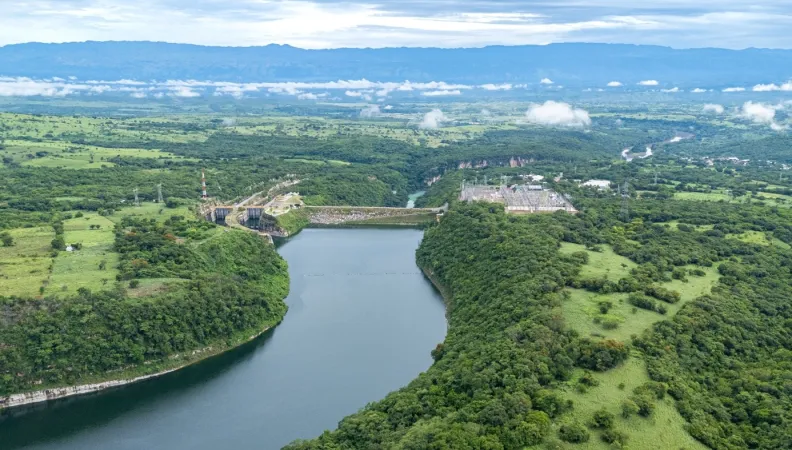
Mexico occupies a distinctive position in Latin America as part of North America. The region’s second-largest economy after Brazil, it is committed to multilateralism and is seeking a balanced path toward a sustainable and inclusive economy. AFD Group has supported Mexico since 2009.
Context
Mexico is Latin America’s second-largest economy. With a population of more than 120 million, it is a modern, young country with an open economy, particularly in relation to its US neighbor. Home to more than 10% of the world’s biodiversity, Mexico is also one of the planet’s most biodiverse countries.
However, the country’s rapid economic growth has raised significant environmental concerns. Labor market flexibility has hindered formal employment and excluded part of the population from social protection systems. Violence and poverty affect nearly half of the population.
Since 2009, Agence Française de Développement (AFD) has supported Mexico in pursuing a low-carbon, climate-resilient development path. AFD works with the federal government and state governments to promote development that benefits the population, particularly the most vulnerable groups. AFD operates through public policy loans to the Mexican state, credit lines for development banks, and technical cooperation programs.
AFD’s Mexico office is attached to the Mexico, Cuba, and Central America regional office.
Our approach
"AFD Group and Mexico: supporting the transition to a low-carbon, resilient economy, reducing pressure on natural resources, and tackling inequality."
AFD Group places the fight against climate change at the core of its operations, supporting both mitigation and adaptation. This makes it a key partner for public and private actors. Its work focuses on four main areas:
- Support for renewable energy projects and the electricity grid, through a longstanding partnership with the national electricity provider CFE, launched in 2011. This includes five non-sovereign loans totaling €800 million, technical cooperation with EDF and RTE, and strategic dialogue on energy transition with the Ministry of Energy (SENER). This positioning has enabled AFD to support innovative market opportunities, including contracts awarded to French companies. In 2019, Proparco signed a $60 million loan with Engie to finance solar and wind energy projects.
- Promotion of a just energy transition, bringing together energy and social agendas. A public policy loan is planned for 2025, accompanied by strategic dialogue and technical assistance on energy planning, financing mechanisms, and energy justice.
- Support for green economic sectors, such as energy efficiency in buildings. In 2024, AFD provided a credit line to the public development bank NAFIN, alongside the Green Climate Fund, as part of the PEEB Cool program. Circular economy, one of the Mexican government’s priorities, has been at the center of AFD’s dialogue with the Ministry of Environment (SEMARNAT) since 2022.
- Strengthening climate resilience in vulnerable territories and communities, through the “Resilience” project, a public policy loan implemented from 2021 to 2024 to reduce economic, social, and climate vulnerability at the local level.
AFD Group is working through strong partnerships to promote the integrated management of healthy and productive terrestrial and marine ecosystems, combining biodiversity conservation, local development, and climate action.
- Strengthening integrated landscape management tools to protect natural ecosystems, through public policy loans and pilot projects in around fifteen states, inspired by French and European experience. These initiatives aim to promote sustainable local environmental governance practices in forest management (2010), nature conservation (2012), and ecological connectivity (2017).
- Mainstreaming biodiversity into productive sectors by promoting sustainable agricultural practices. In cooperation with the Ministry of Agriculture (SADER) and the rural development bank FIRA, AFD supports the sustainable transformation of agricultural and livestock value chains, using approaches based on regenerative agriculture, agroecology, bioeconomy, and One Health.
- Protecting oceans and fishery resources. Since 2022, AFD has been supporting sustainable fishing alongside vulnerable communities, through assistance to the national system of fish refuge zones (Zonas de Refugio Pesquero), in line with Mexico’s national and international ocean agendas.
- Sustainable management and preservation of water resources, in response to growing pressures on water availability and quality. AFD is supporting the development and implementation of the National Water Plan for 2024 to 2030.
Supporting this transition is a key focus of AFD’s work. Since 2011, AFD has built a strategic partnership with the Federal Electricity Commission (Comisión Federal de Electricidad – CFE). Four successive financing agreements have been granted to improve energy efficiency and expand the use of renewable energy, particularly through the modernization of hydroelectric power plants.
AFD has also supported the implementation of the country’s energy reform through two public policy loans to the Ministry of Energy (Secretaría de Energía – Sener), aimed at reducing electricity costs and the sector’s carbon footprint.
To engage Mexican financial actors in advancing the 2030 Agenda, AFD Group draws on its involvement in international networks (IDFC, Finance in Common, NGFS) and its recognized expertise in green finance.
- Providing financing to national development banks, public agencies, and private financial institutions. AFD Group helps anchor sustainable finance in Mexico by offering thematic credit lines focused on climate, energy transition, natural resource preservation, and financial inclusion. These aim to support access to new markets and strengthen internal capacities.
- Fostering the sustainable finance ecosystem through financial mobilization and innovation. AFD works closely with the Ministry of Finance (SHCP), the central bank Banxico, and financial system regulators and supervisors. Since 2024, AFD has been supporting the creation of a public-private dialogue platform to guide the financial sector’s transition toward sustainable finance. This initiative aims to promote coordination, innovation, and best practices, based on standards developed by the Banque de France. The agency also supports the adaptation of macroeconomic models (GEMMES and ESTEEM), developed by its economic research teams, to anticipate the impacts of ecological and economic transitions.
Social inequality is addressed as a cross-cutting issue across all three areas of intervention, through support targeted at different population groups.
- Vulnerable populations. AFD and Proparco prioritize support for the poorest populations and migrants in their operations, aiming to improve access to essential social services and strengthen financial inclusion.
- Gender equality. AFD supports gender equality through projects that incorporate a gender-based approach, aligned with France’s feminist diplomacy, AFD’s commitments, and the priorities of the Mexican government, which created a dedicated Ministry for Women in 2025.
- Working population. AFD promotes human capital development by supporting skills training, decent employment, and labor formalization through projects and a dedicated funding window for civil society organizations. Under the EU4DecentWork project, Expertise France is working with public authorities to improve working conditions in tourism, the automotive sector, agrifood, and domestic work, in partnership with France Travail.
- Citizens. AFD supports civic engagement, democracy, justice, and transparency, including through the implementation of the Escazú Agreement on environmental and climate justice with the Ministry of Foreign Affairs (SRE), and the fight against organized crime through the European program El PAcCTO, led by Expertise France.
In the field
Below, find the country's projects, news, publications, and contact details in one click.
News & Press Releases
Key figures
-
€3.5 billion committed by AFD Group since 2009
-
80% of projects have climate co-benefits
-
75% of projects have gender equality co-benefits