Share the page
The climate transition requires social justice
Published on
The World Inequality Conference, which AFD supports as a partner, will bring together researchers, development practitioners, and policymakers in Paris from 4 to 6 June 2026 to discuss the links between climate change and inequality. One message stands out: without social justice and inclusion, climate action can be neither fully effective nor sustainable.
Climate change is not only an environmental crisis, it also exacerbates social and gender inequalities, exposing the limits of policies that remain insufficiently redistributive and inclusive.
The figures are stark: the world’s richest 10% were responsible for more than half of global emissions between 1990 and 2015. By contrast, the least developed countries – home to around 1.1 billion people and among the lowest contributors to global warming – account for more than two-thirds of deaths linked to climate-related disasters. Without greater efforts to address climate change and inequality, up to 132 million people could be pushed into extreme poverty by 2030.
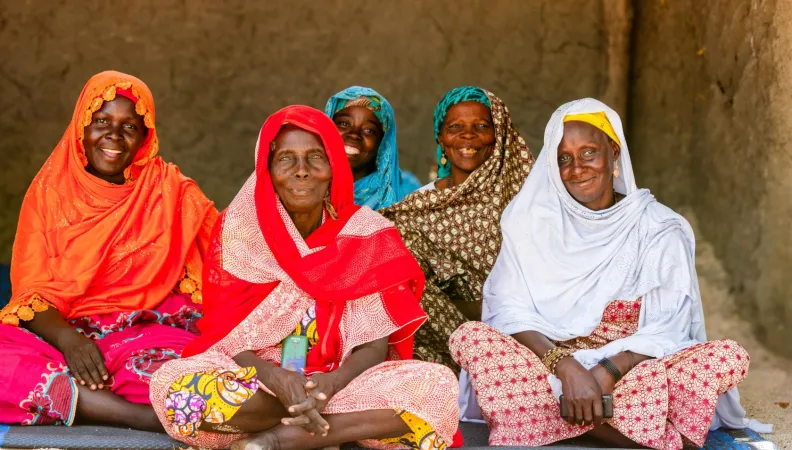
These inequalities are compounded by structural gender inequalities. Because of unequal access to resources, land, and education – as well as the disproportionate burden of unpaid domestic and care work, which is intensified by the climate crisis – women and girls are affected disproportionately by its impacts. By 2030, 236 million women and girls could face hunger, twice as many as men.
Reducing inequalities to make climate action more effective
Despite these realities, climate policies still fail to adequately integrate social and gender dimensions: only 3% of mitigation financing and 5% of adaptation financing identify these issues as a primary objective. Less than 20% of adaptation funding reaches local communities directly, even though they are on the front line of climate impacts. These imbalances reduce the effectiveness of climate policies and can undermine public support for climate action.
Reducing inequalities is essential to making climate action more effective. Some measures, such as carbon taxes, can disproportionately affect low-income populations when they are not accompanied by adequate redistributive mechanisms. The energy transition can also weaken territories or sectors that depend heavily on carbon-intensive activities if employment and retraining challenges are not anticipated. Conversely, research conducted across 193 countries shows that reducing inequalities is associated with lower polluting emissions.
Women, Indigenous Peoples, and local communities: key actors in climate transitions
Women, Indigenous peoples, and local communities play a key role in climate resilience. Their knowledge of local territories and natural resources is essential to developing effective adaptation strategies.
In many regions, women manage resources on a daily basis and develop practical solutions. Their participation also strengthens climate ambition: countries with more women in parliament tend to adopt more climate policies, while companies with more women on their boards invest more in renewable energy. Yet women currently account for less than 30% of environment ministers worldwide.
AFD, committed to just and inclusive climate transitions
In response to these challenges, AFD Group places social justice, gender equality, and local participation at the heart of its work. In 2025, three out of four climate or biodiversity projects financed by AFD included inclusion or equality objectives.
Several projects illustrate this commitment:
- In South Africa, a €400 million loan supports a just energy transition focused on employment, access to electricity, and reducing inequalities, particularly in the province of Mpumalanga.
- In Africa, a €5 million grant through the Feminist Organizations Support Fund (FSOF) has supported 128 civil society organizations working on climate issues through the FACE project (Feminists for Climate and Environmental Alternatives) from 2022-2025.
Through its “Social Link” and “Planet” roadmaps, as well as initiatives such as Adapt’Action and the 2050 Facility, AFD prioritizes financing for the most vulnerable populations and promotes more inclusive governance.
Given the scale of these challenges, aligning climate goals with social justice is essential to building effective, sustainable, and equitable responses.