Share the page
Critical minerals: new partnerships to advance the energy transition
Published on
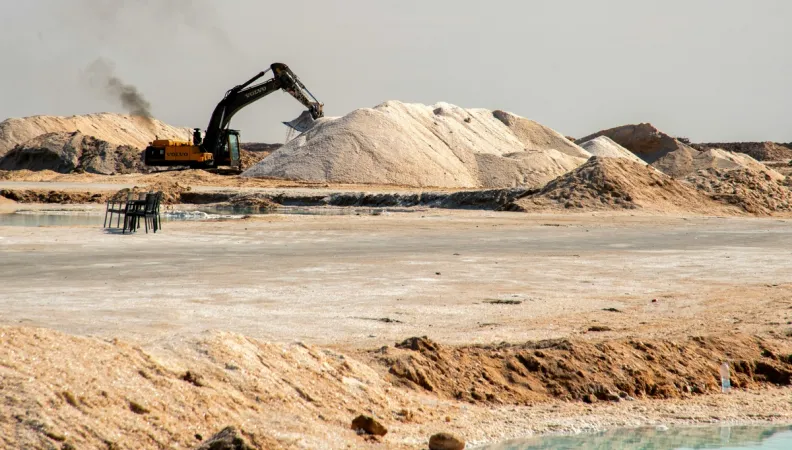
Lithium, cobalt, nickel, rare earths… These minerals, now essential for batteries, wind turbines, and electric vehicles, are raising critical questions about industrial sovereignty and the energy transition amid growing international tensions. A conference organized by AFD Group alongside the G7 Trade Track helped identify several avenues for action.
The latest figures from the International Energy Agency confirm a clear long-term trend: demand for lithium increased by nearly 30% in 2024, while demand for nickel, cobalt, graphite, and rare earth elements grew by 6% to 8%. Rising demand reflects the essential role these minerals play in strategic sectors such as digital technologies, defense, and transportation, as well as in the energy transition. Lithium is used in batteries, copper in power grids, and rare earth elements in electric motors and wind turbines.
Growing trade dependencies
Yet these minerals are difficult to substitute, extract, or source on global markets. Supply chains remain underdeveloped in some sectors, while several producing countries have restricted exports amid intensifying competition among major powers. China’s temporary decision to ban gallium exports to the United States in late 2024 illustrates the dual commercial and geopolitical challenges associated with critical minerals.
To secure supplies in an uncertain and volatile environment, consuming countries are taking action. Since 2022, France has had an interministerial delegation dedicated to the issue, the Délégation interministérielle aux approvisionnements en minerais et métaux stratégiques (DIAMMS). The European Union has adopted the Critical Raw Materials Act, which sets several targets for 2030, including a maximum dependency threshold of 65% on any single non-EU country for each strategic raw material.
Looking beyond extraction: building value chains
Supply security must be considered across the entire value chain. For a consuming country, securing access to a mine or diversifying suppliers of raw minerals does not eliminate dependency if refining, separation, and processing activities remain concentrated in a single country.
For mineral-rich countries, the challenge is to avoid being confined to the role of raw material producers. Such dependence leaves economies exposed to fluctuations in global commodity prices and limits opportunities for economic diversification. The Democratic Republic of the Congo holds a significant share of the world’s cobalt reserves but still captures only a small portion of the value created along the supply chain. Bolivia possesses vast lithium resources but faces the challenge of balancing industrial development with water protection and respect for local communities.
Developing value chains is therefore a strategic priority. Yet the gap between a promising concept and an operational processing facility remains considerable. Mining projects require substantial investment at a time when future revenues and downstream industrial demand often remain uncertain.
Read the research paper
Financing high-risk mining projects differently
This is where public development banks (PDBs) and international financial institutions can play a key role by helping to mitigate risks that private investors are often reluctant to bear alone, including long project timelines, technological uncertainty, and price volatility. Beyond their contribution to project financing and financial structuring, these institutions provide technical expertise and promote robust environmental, social, and governance (ESG) standards.
By minimizing the negative impacts of mining activities while encouraging greater benefits for local communities and a fairer distribution of value, PDBs contribute to the achievement of the Sustainable Development Goals (SDGs). In doing so, they also help create the conditions needed for projects to succeed over the long term.
It is within this framework that AFD Group has renewed its engagement in the sector, focusing on four areas of intervention: sustainable infrastructure, governance, support for value chains, and financing for mining and mineral processing projects.
However, addressing the financing challenge alone will not be enough if industrial buyers are unwilling to pay a premium for minerals produced through traceable and diversified supply chains. Without such long-term commitments, projects aimed at reducing the concentration of global critical mineral production and developing responsible value chains will remain difficult to make commercially viable.
Toward new mining partnerships
For Europe, new partnerships still need to be built: partnerships in which producing countries generate greater value locally, social and environmental standards are both implemented and financed, and European industries accept the cost of reducing strategic dependencies.
Achieving this will require sustained political and technical dialogue with producing countries, the joint development of pilot projects for responsible value chains, and stronger efforts to improve recycling and traceability. It will also require a detailed mapping of mineral value chains that goes beyond the location of raw materials to identify how producing countries can move up the value chain through measures related to ownership structures, revenue sharing, and fiscal policies.
Efforts must also link mineral extraction to the local social conditions needed to support a just transition.
In practice, a combination of long-term offtake agreements, public financing, technology transfer, skills development, and local processing could enable producing countries to become more than exporters of raw minerals. This approach aligns with the recommendations of the T7, the G7’s engagement group for think tanks.
Read the concept note
Read more
How does AFD support the energy transition away from fossil fuel dependence?
Published on April 22, 2026
Latin America invests in renewable energy to reduce its dependence on fossil fuels
Published on January 27, 2025